
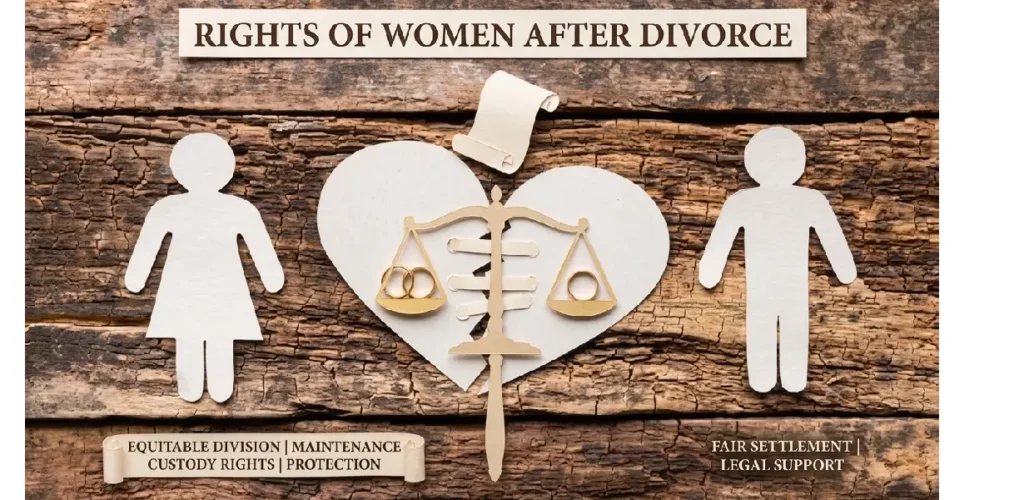
Let’s be honest, divorce can feel like life just hit the reset button without asking for permission. One minute you’re planning a future, the next you’re Googling rights of women after divorce at 2 a.m. wondering what happens next. I’ve worked with many clients in Kenya facing this exact moment, and trust me, clarity changes everything.
So, what exactly are the rights of women after divorce in Kenya? What can you claim, what should you fight for, and what should you ignore? Let’s break it down in a way that actually makes sense.
Understanding the Legal Framework in Kenya
When we talk about the rights of women after divorce, we are mainly dealing with laws like:
- The Marriage Act
- The Matrimonial Property Act
- The Children Act
These laws don’t just exist for decoration, they actively protect your financial, parental, and personal rights after divorce.
Ever wondered why some women walk away with assets while others don’t? It usually comes down to proof of contribution and proper legal guidance.
Right to Matrimonial Property
This is usually the first question: “Do I get half of everything?” Short answer, not automatically.
Kenyan law focuses on contribution, not a strict 50/50 split.
What counts as contribution?
You don’t have to be the one paying the mortgage to claim your share. Courts recognize:
- Financial contributions, like paying bills or loans
- Non-financial contributions, like raising children
- Managing the home
- Supporting your spouse’s career
So yes, being a full-time parent counts. Finally, right?
Key takeaway
The rights of women after divorce include claiming a share of matrimonial property based on contribution, not just ownership on paper.
Right to Child Custody and Maintenance
If children are involved, things get emotional fast. I’ve seen this firsthand, and it’s never just legal, it’s deeply personal.
Custody decisions in Kenya
Courts focus on the best interests of the child, not gender bias. However, younger children often stay with the mother unless there are strong reasons otherwise.
Your rights include:
- Applying for legal custody or joint custody
- Receiving child maintenance from the father
- Participating in key decisions about the child’s life
Let me ask you this, why should you carry the financial burden alone? Exactly.
The rights of women after divorce strongly protect your role as a parent and ensure financial support for your children.
Right to Spousal Maintenance
Now this one surprises many people.
Kenyan law allows a woman to claim spousal maintenance, but it’s not automatic or permanent.
When can you claim it?
- If you depended financially on your spouse
- If you cannot immediately support yourself
- If there’s a significant income gap
Courts look at fairness, not sympathy.
IMO, this is one of the most misunderstood rights of women after divorce, many people assume it lasts forever. It doesn’t.
Right to Occupation of the Matrimonial Home
Here’s a tricky one. Who stays in the house?
Even if the house is in your spouse’s name, you may still have a right to live there temporarily.
Important points:
- Courts can allow you to stay, especially with children
- Ownership and occupation are not always the same
- You cannot be evicted unfairly
The rights of women after divorce protect you from being left homeless overnight.
Right to Protection from Abuse or Harassment
Divorce can sometimes bring out the worst in people. If things turn ugly, the law steps in.
You have the right to:
- Apply for restraining orders
- Seek protection against harassment or violence
- Report threats or intimidation
Let’s be real, peace of mind matters just as much as property.
Quick Summary Table.
| Right | What It Means | Key Risk to Watch |
|---|---|---|
| Property rights | Share based on contribution | Lack of proof of contribution |
| Child custody | Best interests of child | Poor documentation |
| Child maintenance | Financial support for children | Non-compliance by ex-spouse |
| Spousal maintenance | Temporary financial support | Not automatic or guaranteed |
| Right to residence | Stay in matrimonial home | Ownership disputes |
Common Mistakes Women Make After Divorce
I’ll say this bluntly, some mistakes cost people everything.
Watch out for these:
- Failing to document your contributions
- Assuming everything will be split equally
- Ignoring legal advice early on
- Accepting informal agreements without documentation
Ever thought “we’ll sort it out amicably”? That works, until it doesn’t.
Practical Tips to Protect Your Rights
If you want to fully enjoy the rights of women after divorce, you need to be proactive.
Do this immediately:
- Gather financial records
- Document your contributions
- Secure legal representation
- Keep communication documented
FYI, the earlier you act, the stronger your case becomes.
Why Legal Guidance Matters
You can try to figure it all out alone, but that’s like trying to fix a leaking roof during a storm. Risky.
A lawyer helps you:
- Identify all your entitlements
- Avoid costly mistakes
- Negotiate better settlements
- Represent you in court if needed
If you want tailored advice and support, you can explore the firm’s legal services for
FAQs About Rights of Women After Divorce
1. What are the rights of women after divorce in Kenya?
The rights of women after divorce include property division based on contribution, child custody, child maintenance, and in some cases spousal maintenance. Courts aim to ensure fairness rather than automatic equality. You also have the right to protection from harassment and, in some cases, continued residence in the matrimonial home.
2. Do women automatically get half of the property after divorce?
No, Kenyan law does not guarantee a 50/50 split. The rights of women after divorce depend on proof of contribution. Courts assess both financial and non-financial contributions such as childcare and household management before dividing property.
3. Can a woman get custody of children after divorce?
Yes, and courts prioritize the child’s best interests. The rights of women after divorce include applying for custody or joint custody. Mothers often receive custody of young children unless there are compelling reasons otherwise.
4. Is a woman entitled to maintenance from her ex-husband?
Sometimes. The rights of women after divorce allow for spousal maintenance where financial dependency exists. However, courts consider factors like income, ability to work, and fairness before granting it.
5. What happens if property is registered in the husband’s name?
Ownership on paper does not cancel your rights. The rights of women after divorce allow you to claim a share if you contributed to acquiring or maintaining the property. Evidence becomes crucial in such cases.
6. Can a woman stay in the matrimonial home after divorce?
Yes, in certain situations. The rights of women after divorce may allow continued occupation, especially if children are involved. Courts can issue orders to prevent unfair eviction.
7. What should I do immediately after deciding to divorce?
Start by gathering documents, seeking legal advice, and documenting contributions. The rights of women after divorce become easier to enforce when you act early and stay organized.
8. How long does it take to resolve divorce and related claims?
It depends on complexity and whether parties agree. The rights of women after divorce may take months or longer to fully enforce, especially in contested cases involving property or custody.
If you feel unsure about your situation, you don’t have to figure everything out alone. Speaking to a qualified lawyer can make the process clearer and less stressful.
Final Thoughts
Divorce may feel like an ending, but legally, it’s also a beginning. The rights of women after divorce exist to protect your dignity, your finances, and your future.
You don’t have to walk away empty-handed or confused. With the right information and support, you can move forward with confidence.
And honestly, isn’t that the goal?